The physics of dark matter and dark energy influences cosmological structure growth over a wide range of distance scales. Observational measurements of the large-scale structure of galaxies therefore provide a laboratory to study the physics of the dark sector, and near-future galaxy surveys such as the Large Synoptic Survey Telescope (LSST) and the Dark Energy Spectroscopic Instrument (DESI) have potential to place percent-level constraints on the standard cosmological model. Systematic uncertainty in our ability to model the physics of galaxy formation has emerged as one of the leading challenges to this program. I will discuss ongoing work on a new approach to cosmological inference, in which forward-models of the galaxy-halo connection are grafted directly into some of the world's largest cosmological simulations, and the likelihood function of a multi-probe analysis is emulated using machine learning techniques. I will describe the connection between this effort and traditional semi-analytic models and hydrodynamical simulations, and outline a program to realize the potential of Stage IV dark energy experiments with the next generation of supercomputers.
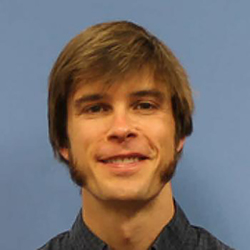
Speaker: Andrew Hearin, Argonne National Laboratory
Host: Luke Kelley
Keywords: Physics, Astronomy, Astrophysics
Audience
- Faculty/Staff
- Student
- Public
- Post Docs/Docs
- Graduate Students
Interest
- Academic (general)