The Department of Neuroscience Presents:
2026 James C. Houk Lecture in Motor Control: "Motor Action Selection, Evaluation and Reinforcement by the Basal Ganglia"
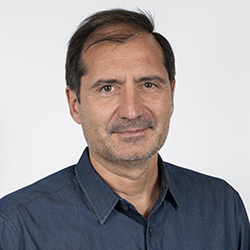
Bernardo Sabatini, MD, PhD
Alice and Rodman W. Moorhead III Professor of Neurobiology
Harvard Medical School
Abstract
In order to survive in and adapt to changing environments, animals must choose appropriate actions to achieve their goals. This process depends on their past experience, internal state, and environmental conditions and must be be rapidly adapted based on the outcome of their choice. Here we discuss how circuits and synapses of the basal ganglia, an evolutionarily old and phylogenetically conserved set of subcortical nuclei, contribute to these processes in mice. We focus on specialized features of the basal ganglia circuit that uniquely contribute to action selection and reinforcement as well as the role of dopamine in these processes. Although we study mice, we believe our findings are likely relevant for understanding human behavior and disease.
About the James C. Houk Lecture in Motor Control
In 2020, the late James Houk, PhD, former chair and professor of Physiology (now Neuroscience), and his wife Antoinette established the Dr. James C. Houk Fellowship in Neuroscience through a bequest. Their gift provides funding for a graduate student or postdoctoral fellow training in the Department of Neuroscience at Northwestern and also supports the annual James C. Houk Lecture in Motor Control, delivered by a renowned neuroscientist whose work reflects Dr. Houk’s broad interests.
About James C. Houk, PhD
Dr. James C. Houk originally studied electrical engineering before receiving his PhD in physiology at Harvard University. As an assistant professor at Harvard, he studied Golgi tendon organs, muscle spindles and developed control models of muscle activation through neuronal circuits in the spinal cord.
Later, as an associate professor at Johns Hopkins Medical School, Houk began work on the central nervous system in behaving monkeys, work he continued at Northwestern University, after being recruited in 1978 as chair of the Department of Physiology (now Neuroscience). During this time, Houk also built a world-renowned systems neuroscience group within the department.
In 2001, after 23 years, Houk stepped down as chair to concentrate on multimodal approaches to studying how the nonlinear dynamics of microscopic modules in the brain give rise to its unique computational properties. He became particularly interested in the interplay between the basal ganglia, motor cortex and cerebellum.