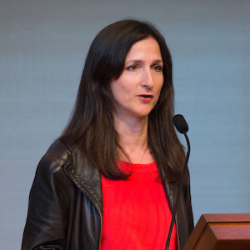
Scientists have been speculating on Venus as a habitable world for over half a century, not the scorching surface, but the much cooler atmosphere at 48 to 60 km above the surface. The concept is that Venus’ perpetual cloud cover might host life, as Earth’s clouds do. The Venus clouds, however, are not made of water but are composed of concentrated sulfuric acid—an aggressive chemical that is toxic for Earth life. New lab-based experiments show some biomolecules are stable in concentrated sulfuric acid, and advance the notion that the Venus atmosphere environment may be able to support complex chemicals needed for life and motivate the astrobiology-focused Morning Star Missions to Venus.
Audience
- Faculty/Staff
- Student
- Post Docs/Docs
- Graduate Students
Contact
CIERA Astrophysics
(847) 491-8646
Email
Group
Interest
- Academic (general)