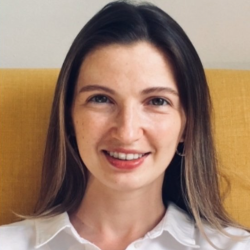
Please join the International Relations Speaker Series as they host Polina Beliakova, Assistant Professor of Foreign Policy & Global Security at American University.
U.S. security assistance has an uneven record of success. While assistance programs sometimes succeed in training and equipping partner forces, they frequently fail to induce the durable defense institution reforms needed to sustain these gains. Existing scholarship emphasizes conditionality—such as aid withholding or conditional inducements—as essential for reshaping recipient incentives to reform. Yet U.S. practice diverges from this logic: civilian officials rarely employ conditionality-based tools, while the U.S. military has assumed a leading role in influencing partner civilians through persuasion rather than coercive leverage. This project explains this puzzle by focusing on the power dynamics of U.S. security assistance. I argue that the avoidance of high-influence strategies and the growing role of the U.S. military stem from institutional constraints on civilian exercise of power in security assistance. Although security assistance entails substantial material resources, individual U.S. officials lack the political prerogative to alter aid flows once approved by Congress. In Dahlian terms, the power base is large, but the instruments of power are narrow, leading officials to rely on soft power (attraction and persuasion) as their primary means of influence. The U.S. military often serves as an effective carrier of this soft power, drawing on its professionalism, prestige, and appeal. However, persuasion alone is insufficient to compel partner elites to disrupt entrenched political and economic arrangements, helping explain limited reform outcomes. The paper illustrates this argument through U.S. security assistance to Ukraine between 2014 and 2022.
Dr. Polina Beliakova is a scholar of international security focusing on civil-military relations and the use of force, with regional expertise in Russia and Ukraine. Being a native Ukrainian and Russian speaker, Dr. Beliakova collects data through elite interviews, fieldwork, archival research, and systematic review of local media sources, using quantitative and qualitative approaches for data analysis. Her book project, Know Thy Military: How Governmental Policies Weaken Civilian Control, highlights the understudied effects of governmental decisions about the use of force on the erosion of civilian control in the states with historically coup-averse militaries. The empirical chapters build on evidence from Russia, Ukraine, Israel, and the United Kingdom. Dr. Beliakova's work has been published by Comparative Political Studies, Texas National Security Review, Perspectives on Terrorism, Foreign Affairs, War on the Rocks, POLITICO, and the Washington Post. Her expertise on the Russian defense sector, Ukraine's security sector governance, and Russia's post-Cold War use of force informed projects by the U.K. Government's Foreign, Commonwealth & Development Office, Transparency International, and the World Peace Foundation, among others. Prior to joining American University, Dr. Beliakova held research positions at the Massachusetts Institute of Technology and Dartmouth College.