The evolution of galaxies is fundamentally connected to the evolution of their central black holes. The large-scale environment of the host galaxy will affect the rate at which gas and stars can be accreted onto the central supermassive black hole. In response, accretion energy can regulate and ultimately drive the end of star formation in these host galaxies. I will present recent work using multi-wavelength observations to separate tidal disruption events from active galactic nuclei, understand the galaxy-scale processes that drive the rate of tidal disruption events, and to constrain the duty cycle of black hole feedback during the period where galaxies cease star formation and evolve to quiescence. I will highlight the near-future possibilities with Rubin observatory and other facilities to dramatically expand our understanding of galaxy - black hole co-evolution.
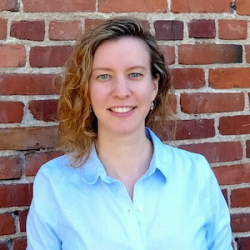
Speaker: Decker French, University of Illinois, Urbana-Champaign
Host: Allison Strom