EDGS Book Talk: The Profligate Colonial with Lisandro Claudio
Thursday, March 5, 2026 |
12:30 PM - 1:30 PM CT
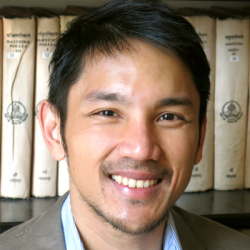
Join us for a book talk with Lisandro Claudio on his book, "The Profligate Colonial: How the US Exported Austerity to the Philippines."
Join the Roberta Buffett Institute's Equality Development and Globalization Studies (EDGS) Program for a book talk with Lisandro E. Claudio, Associate Professor of South and Southeast Asian Studies at the University of California, Berkeley and author of The Profligate Colonial: How the U.S. Exported Austerity to the Philippines, a look at how austerity, long before it became a buzzword of modern technocracy, was a tool of US empire. Claudio argues that this orthodoxy is in fact a colonial inheritance—a legacy of American rule that cast Filipinos as reckless spenders and imposed monetary discipline as a civilizing force. At the center of this logic is the "profligate colonial," a feminized, racialized figure who wastes public funds and so requires the steady hand of imperial governance.
Focusing on key moments in Philippine economic history across the twentieth century, Claudio charts how austerity was first exported through empire, then domesticated in line with nationalist ambitions. Austerity became not just policy, but an ideology that transcended political divides and reshaped the boundaries of the Philippine economic imagination.
Lunch will be served at 12:15 p.m.
Please note that 720 University Place is not an ADA-accessible space. Increasing physical access to buildings and facilities is a goal of the University, but not all buildings and venues have been updated.
About the Speaker
Lisandro Claudio, an intellectual and cultural historian of the Philippines, is an Associate Professor at the Department of South and Southeast Asian Studies and is presently the faculty chair of Berkeley's Center for Southeast Asia Studies. His book Liberalism and the Postcolony: Thinking the State in Twentieth-Century Philippines (NUS, Kyoto, and Ateneo de Manila Press) received the 2019 George McT. Kahin Prize from the Association of Asian Studies and the 2019 European Association for Southeast Asian Studies Humanities Book Prize. He is also the author of a short book , Jose Rizal: Liberalism and the Paradox of Coloniality (Palgrave), which examines how turn-of-the-century liberalism informed the birth of Filipino literature and nationalism.
Before his appointment at Berkeley, Claudio taught at Ateneo de Manila University and De La Salle University. He was also a post-doctoral fellow at Kyoto University’s Center for Southeast Asian Studies.
Zachary Shulman
Email