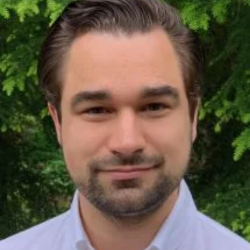
Please join the Race, Ethnicity, and Politics Workshop as they host Rutger Ceballos, Assistant Professor of Political Science at the University of Oregon, for a presentation titled "The Mississippi Valley, Davis Bend, and the (Il)Legibility of Black Freedom"
Abstract:
How did emancipated Black workers influence the development of the Reconstruction state? In this chapter, I explore the complex relationship between freed people and white federal officials charged with managing the transformation of Southern land and labor regimes during wartime Reconstruction. In particular, I focus on a set of liberated plantations at Davis Bend, Mississippi. On these plantations, federal officials worked to provide freedmen with limited control over the land and their own labor, in an experiment designed to show that large-scale plantation agriculture was profitable under wage labor and Black land ownership. Drawing on the wartime reports, testimonies from Black workers, and federal regulations, I argue that only certain forms of Black community and freedom were legible to white federal officials. These limited forms of capitalist freedom were then reified into the political and economic framework of the post-Emancipation state.
Rutger Ceballos's research explores the relationship between American political development, African American politics, and American political thought, focusing on the contestation over labor and land regimes in the context of the Civil War, Emancipation, and Reconstruction. His current book project, Managing Emancipation: Land, Labor, and the Reconstruction of the American Racial Capitalist State, examines how complex interactions between federal officials and newly emancipated Black workers reshaped the American federal state and restructured racialized labor and land regimes. In addition to his work on Emancipation and Reconstruction, Rutger has worked on the history of labor organizing in the Pacific Northwest, left-wing political movements in the early 20th century, and the political thought of Frederick Douglass.
Rutger received his Ph.D. in Political Science from the University of Washington, an M.A. in the History of Political Thought from Queen Mary, University of London, and his B.A. in Political Science, International Studies, and History from the University of Washington. Before working in academia, Rutger worked as a union organizer and labor activist in the Pacific Northwest.